
In Kyoto, a little slower
From evening light on Yasaka Pagoda to everyday life at Nishiki Market.
November 13, 2026 · 20 min readIn the photos, Kyoto is always frozen in a single frame. But the memory of a trip often lingers longer in the lanes that lead up to that frame. A day spent walking beneath low eaves, pausing at the edge of a market. On this Kyoto trip, try leaving a little more room between destinations.
In this article · about a 9-minute read
- When the pagoda appears at the end of the lane
- Another side of Kyoto at Nishiki
- Ending the day with a cup of tea
- Don't try to see all of Kyoto in one day
- What catches your eye beneath wooden eaves
- At the market, notice what's there before deciding what to buy
- Buying tea and drinking tea are different kinds of trips
- Check the rail lines first, then choose the last stretch
- What you bring home from Kyoto isn't only photos
- A half day in Kyoto: focusing on a single district
- A full day in Kyoto: why you need time left empty
- Before you leave, save the Kyoto that suits you
01When the pagoda appears at the end of the lane
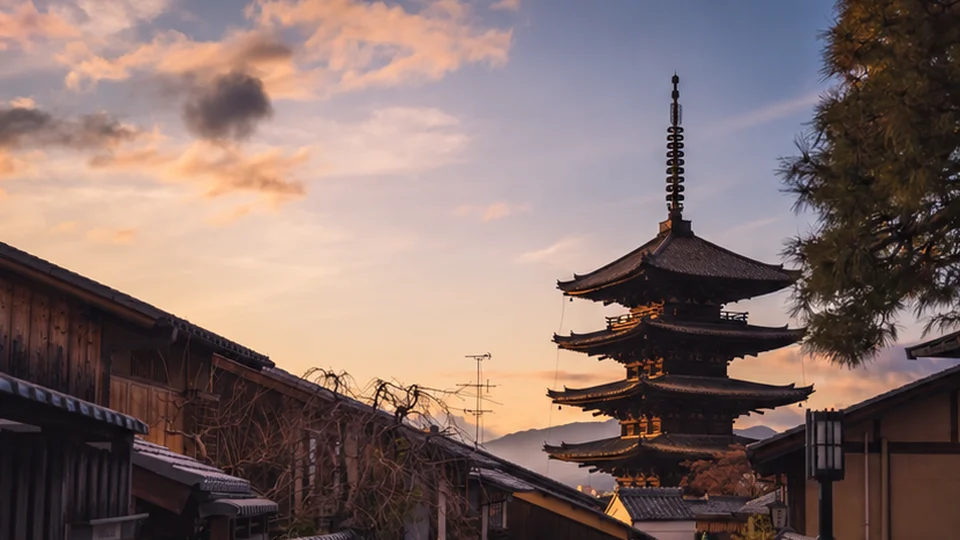
In the photo, Yasaka Pagoda rises tier by tier above the old rooftops. As the sun sinks, the line between sky and eaves sharpens, and the colors of the street grow quieter. If you plan to explore Higashiyama and Gion, give that one district plenty of time. The Japan National Tourism Organization presents it as a representative area to visit, but nothing says how fast you have to move through it.
02Another side of Kyoto at Nishiki
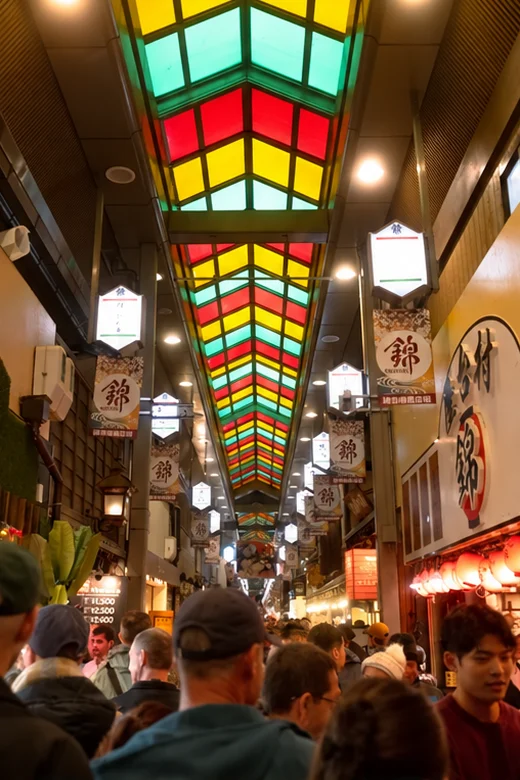
After the temples and lanes, it's time to look at the city's table. Nishiki Market is lined with shops selling fish, vegetables, side dishes and yuba. According to Kyoto's official guide, the market runs about 400m. It suits browsing to see what makes each shop different rather than covering a long distance. If you buy food, don't eat while walking; use the eating area of the shop where you bought it.
03Ending the day with a cup of tea
Instead of adding one more destination, you might leave time for tea. The Ippodo Tea Kyoto Main Store in Teramachi has the Kaboku Tearoom, where you can drink tea or buy it. Rather than covering Higashiyama, the market and a tearoom all in one day, choose according to where you're staying and how much energy you have. Before taking photos, check for private property and photography notices, and take care not to block narrow paths.
04Don't try to see all of Kyoto in one day
Spread the Kyoto map wide and the places you want to visit are scattered in different directions. A plan that goes east in the morning, west at lunch and back to the center in the evening can easily cut the time you actually spend in each place. For a first trip, pick one district as the focus of each day and group the places you most want to see around it.
On the day you walk Gion and Higashiyama, it's best to leave plenty of time to take in the mood of the lanes and streets. Nishiki Market and the Teramachi tearoom can wait for another day in the center. The places in this article aren't a course you must follow in order. They're suggestions to combine at your own pace.
05What catches your eye beneath wooden eaves
If you've watched the pagodas and temples from a distance, now look at the scenes close by. A small notice at a shop door, the shade cast by the eaves, the way the light changes at each bend in the lane: these fill out the memory of a trip. Walking slowly and observing may leave you with more lasting moments than trying to find exactly the scene you saw in a photo.
Before they are a stage for travelers, the lanes are places where people live. Check for no-photography signs and private property markers, and please don't peer inside doorways or block the way while taking pictures. Sometimes the memory of having passed through a place comfortably lasts longer than one good photo.
06At the market, notice what's there before deciding what to buy
When you step into Nishiki Market, take a lap first, then take your time choosing your own meal. Rather than looking only for familiar food, notice what differs from shop to shop, such as vegetables, side dishes and dried goods, and the city's daily life feels a little closer. You don't need to taste everything. Picking one thing you're curious about and asking what it's made of can be experience enough.
If you plan to share food with your group, check the portion and where you can eat before ordering. If you have allergies or ingredients you avoid, it helps to prepare a short sentence to show in advance. Instead of guessing a dish by how it looks, confirm the ingredients, and enjoy eating slowly at the spot the shop points you to.
07Buying tea and drinking tea are different kinds of trips
Choosing tea as a souvenir and sitting down to drink it in a tearoom are two different pleasures of travel. If you're looking for tea to give as a gift, think about how you usually drink it and what tools you have at home. Finding a tea you'll actually drink often can keep the memory of the trip alive longer than choosing a famous name.
If you plan to rest in a tearoom, leave room before your next plan rather than squeezing it between short transfers. You can find the Ippodo Tea Kyoto Main Store and Kaboku Tearoom details in the Food & cafés tab. Check the official guide for the current menu and how to use the space, and on the day, go along with the order and atmosphere of the place.
08Check the rail lines first, then choose the last stretch
Kyoto's official transport guide introduces ways to get around by rail and subway. Rather than looking only at the shortest distance on the map, think of it in parts: the station nearest your destination, and the walk or bus ride after that. The comfortable route can differ between a day with luggage and a day of a light stroll.
Fewer transfers don't necessarily make the journey less tiring. Compare a route with a long walk at the end against one with an extra transfer. Rather than buying a ticket first and fitting your plans around it, decide on the district you want to visit, then check which operators and lines are available, and it becomes easier to make the choice you need.
09What you bring home from Kyoto isn't only photos
When you sort through your photos at the end of the trip, keep one picture of an ordinary lane next to the most striking views. If you jot down why your steps slowed on that road, or what you were curious about at the market, Kyoto stays with you as a concrete memory rather than the name of a landmark. A small note also helps when you tell someone about the trip later.
Save the places you'd like to revisit in a separate list rather than in your next itinerary. Think of them not as what you missed this time, but as reasons to come back. If you met Kyoto a little more slowly, it may suit you to leave with the feeling that a story is still unfolding rather than that everything is done.
10A half day in Kyoto: focusing on a single district
With a short itinerary, rather than fitting in both a walk through Higashiyama and a meal in the center, first choose which one draws you more. On a day you want to see the lanes around Yasaka Pagoda, decide where to rest nearby. On a day you're curious about the market, plan around Nishiki and Teramachi. Instead of widening the map, it's a trip of looking closely at the district you've chosen.
Before you set out, save both your way back and the last place you need to get to. Retracing the same path isn't a bad plan. A small shop or the shape of a road you missed while searching for the pagoda may catch your eye on the way back. Walking the same road with different eyes is as much a part of travel as taking a different road.
11A full day in Kyoto: why you need time left empty
If you have a whole day, pick just one thing to do in the morning and one in the afternoon. For example, walk the lanes in the morning, then stop by the market or a tearoom in the afternoon. If you leave plenty of time for travel and meals in between, you don't have to rush the whole schedule when a place turns out busier than expected. You don't need to fit in every candidate you've saved.
So you can easily change plans with the weather or how you feel, look up one indoor place to rest as well. Check the official guide for its hours and menu. When you get a short break, instead of searching for the next destination on your phone, take a moment to look back over the scenery you've seen, and what you want to see more of in the afternoon will sort itself out.
12Before you leave, save the Kyoto that suits you
Finally, try trimming the places you've saved. Sorting them into must-sees, places for if there's time, and places to leave for the next trip gives your day a framework. You don't have to squeeze something into your itinerary just because it appeared in someone's recommendation. Your travel taste shows not only in how much you've visited but also in thinking about what you choose to skip.
You can look up what you need on the spot in this article's tabs. Check the Location tab for exact map points, the Transport tab for ways to get around, and the Entry notes tab for the official guidance to prepare. When the unhurried Kyoto you pictured while reading sits alongside the information you need to actually move, preparing for the trip gets a little less complicated.
Leave blanks on your map, and the lanes become the trip.
A travel guide newly compiled by TripTok from public materials of tourism authorities and operators. It is not a firsthand visit review.
Japan National Tourism Organization · Kyoto travel guide ↗Kyoto official tourism guide · Nishiki Market ↗Ippodo · Kyoto Main Store and Kaboku ↗Kyoto official tourism guide · Travel etiquette ↗Before you visit, please check the official guide again for opening hours, menu and conditions of use.